In structural design and B2B project estimation, choosing the right walling material is a decision that dictates both structural weight and thermodynamic performance. For decades, red clay bricks were the standard. Today, Autoclaved Aerated Concrete (AAC) blocks have established themselves as the modern benchmark. As a civil engineer with over 25 years of site experience, I have closely analyzed how this material switch impacts the overall cost, speed, and safety of high rise structures.
This technical analysis compares red clay bricks and AAC blocks across six engineering properties. We look at the physics, calculations, and financial benefits that developers face when selecting their masonry envelope.
| Engineering Property | Traditional Red Clay Bricks | Autoclaved Aerated Concrete (AAC) Blocks | Structural & Economic Advantage |
|---|---|---|---|
| Dry Density | 1,800 to 2,000 kg/m³ | 550 to 650 kg/m³ | Reduces structural dead load of high rises by up to 30%, saving steel. |
| Compressive Strength | 3.0 to 3.5 N/mm² | 3.5 to 4.5 N/mm² (IS 2185 Part 3) | Higher uniform load bearing capacity, leading to safer construction. |
| Thermal Conductivity | 0.81 W/m·K | 0.12 to 0.16 W/m·K | Up to 6x superior thermal insulation, reducing HVAC energy costs by 25%. |
| Acoustic Insulation | 35 dB (standard) | 44 dB (superior acoustics) | Better sound barrier (STC-44 rating), ideal for hotels and hospitals. |
| Fire Resistance | 1 to 2 Hours | Up to 4 Hours (UL 94 rated) | Non combustible structure, melting point is above 1,200°C. |
| Construction Speed | Standard rate, high joint counts | 3x faster installation speed | Larger block size means 80% fewer joints, saving thin bed mortar. |
1. Dry Density: Dead Load Reduction
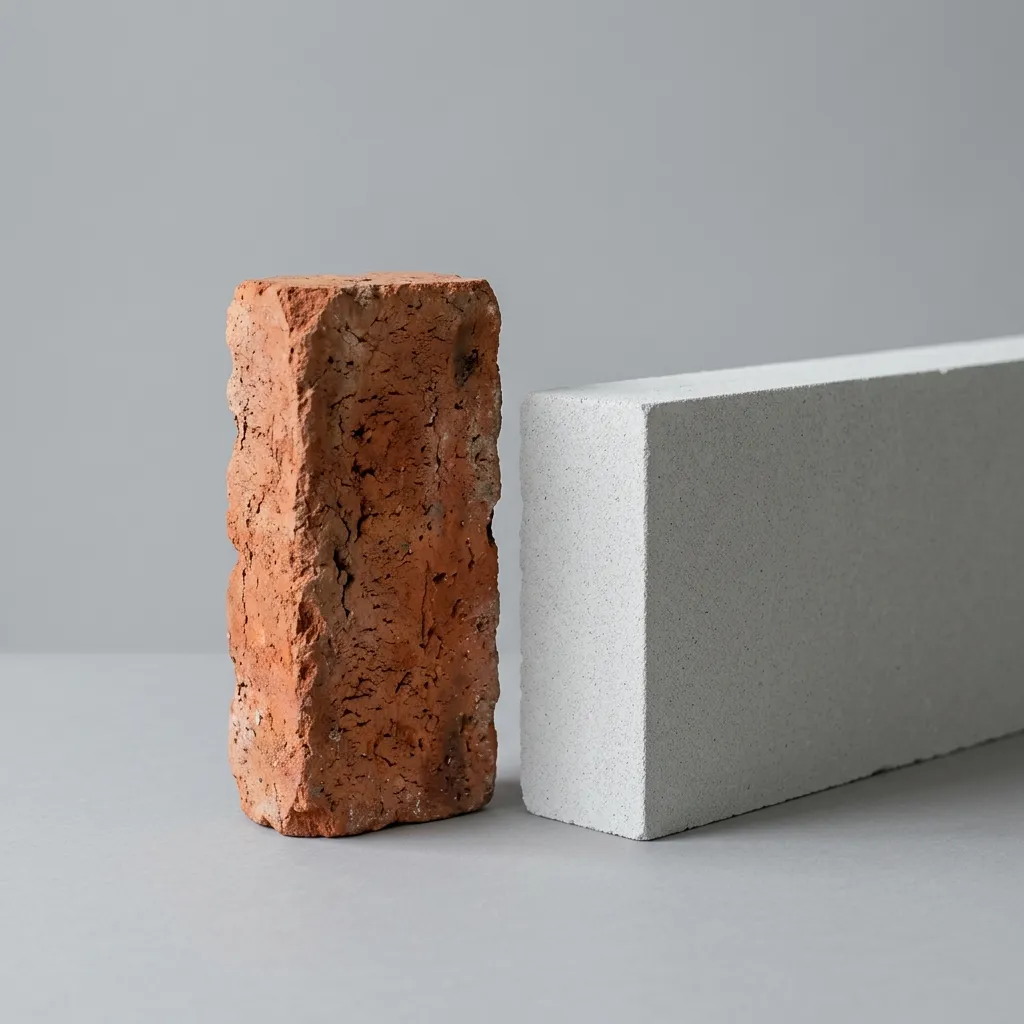
The dry density of traditional red clay bricks ranges from 1,800 to 2,000 kg/m³. In contrast, Balaji AAC blocks have a dry bulk density of 550 to 650 kg/m³. This means AAC blocks are approximately one third of the weight of traditional bricks.
For high rise structural designs, this density difference yields cascading benefits. When masonry dead weight is reduced by 30%, the axial loads transmitted to the RCC columns are significantly smaller. Structural engineers can redesign the frame, reducing column sizes and column steel reinforcement configurations by 15% to 20%. Raft foundation concrete volumes are also reduced by 10% to 15% because bearing pressures on the ground are lower.
2. Compressive Strength and Code Compliance
Many builders assume that clay bricks are stronger because of their hard, fired surface. However, site testing reveals that clay bricks have high variation in compressive strength, typically ranging from 3.0 to 3.5 N/mm². AAC blocks provide a uniform compressive strength of 3.5 to 4.5 N/mm², fully complying with IS 2185 (Part 3) Grade I specifications.
Because AAC blocks are manufactured using high pressure steam autoclaving, the calcium silicate hydrate crystallizes into a stable phase called Tobermorite. This crystal lattice provides uniform load bearing capacity across the block. In addition, the high dimensional precision of AAC blocks (within 1.5mm tolerance) ensures that loads are distributed evenly throughout the masonry wall, eliminating localized stress concentrations that cause wall cracks.
3. Thermal Conductivity and Energy Savings
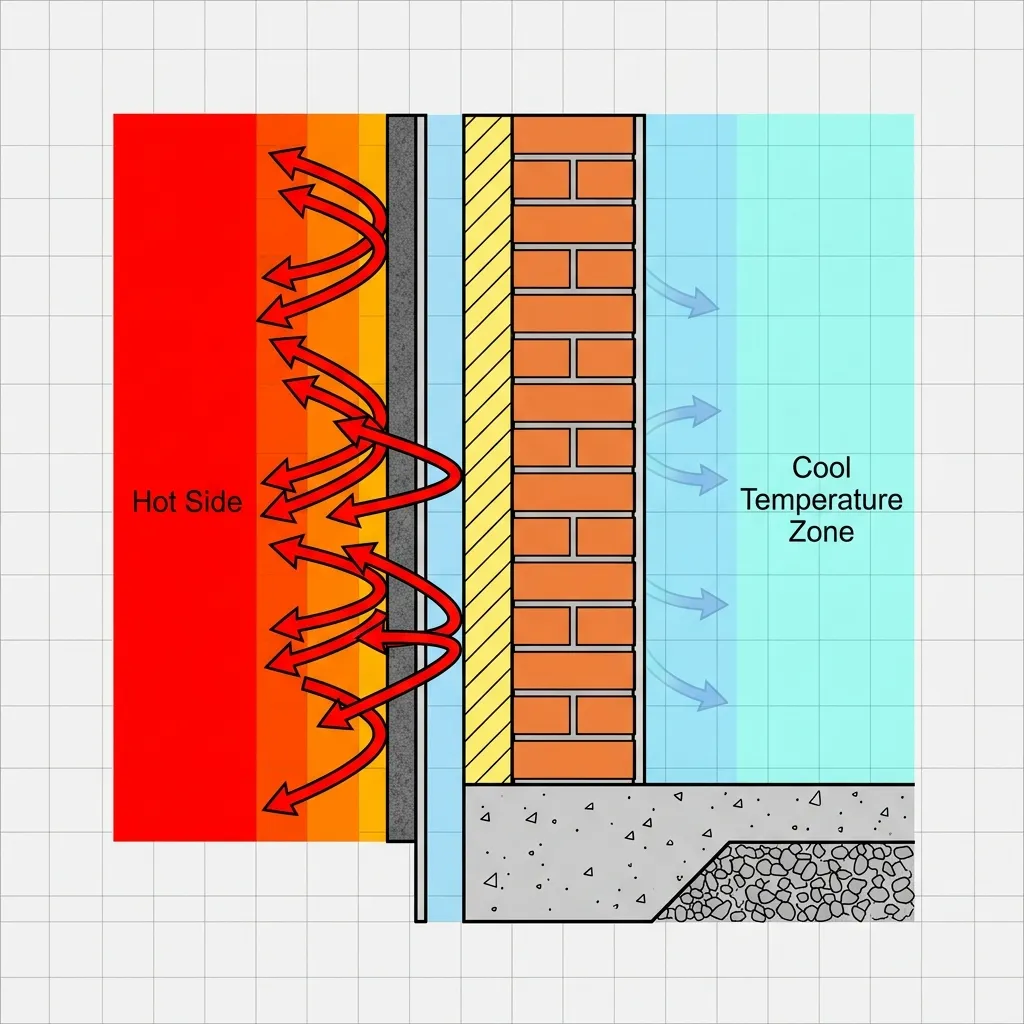
Red clay bricks have a thermal conductivity of 0.81 W/m·K, which allows external heat to transfer easily into building interiors. AAC blocks have a thermal conductivity of 0.12 to 0.16 W/m·K, which is up to six times superior in thermal insulation.
For B2B commercial developers, this thermal envelope decreases the heat transmission coefficient (U value) of external walls from 2.45 W/m²·K (clay brick) down to 0.65 W/m²·K (AAC). Under local climate conditions in Maharashtra and Gujarat, this keeps interiors cooler, reducing air conditioning load calculations by 25% to 30%. This allows developers to install smaller HVAC systems, saving upfront capital and cutting ongoing energy utility costs for occupants.
4. Acoustic Insulation: Damping Sound Transmission
Clay brick walls of 150mm thickness provide a sound transmission class (STC) rating of approximately 35 dB. AAC walls of the same thickness achieve a superior rating of 44 dB. This sound damping capability is due to the microscopic air pores inside the aerated concrete.
The independent cell structure of AAC acts as a acoustic damper, scattering sound waves as they travel through the block. This makes AAC the preferred material for partition walls in commercial projects like hotels, hospitals, and residential towers, where privacy and acoustic comfort between adjacent units are critical.
5. Fire Resistance: Operational Safety
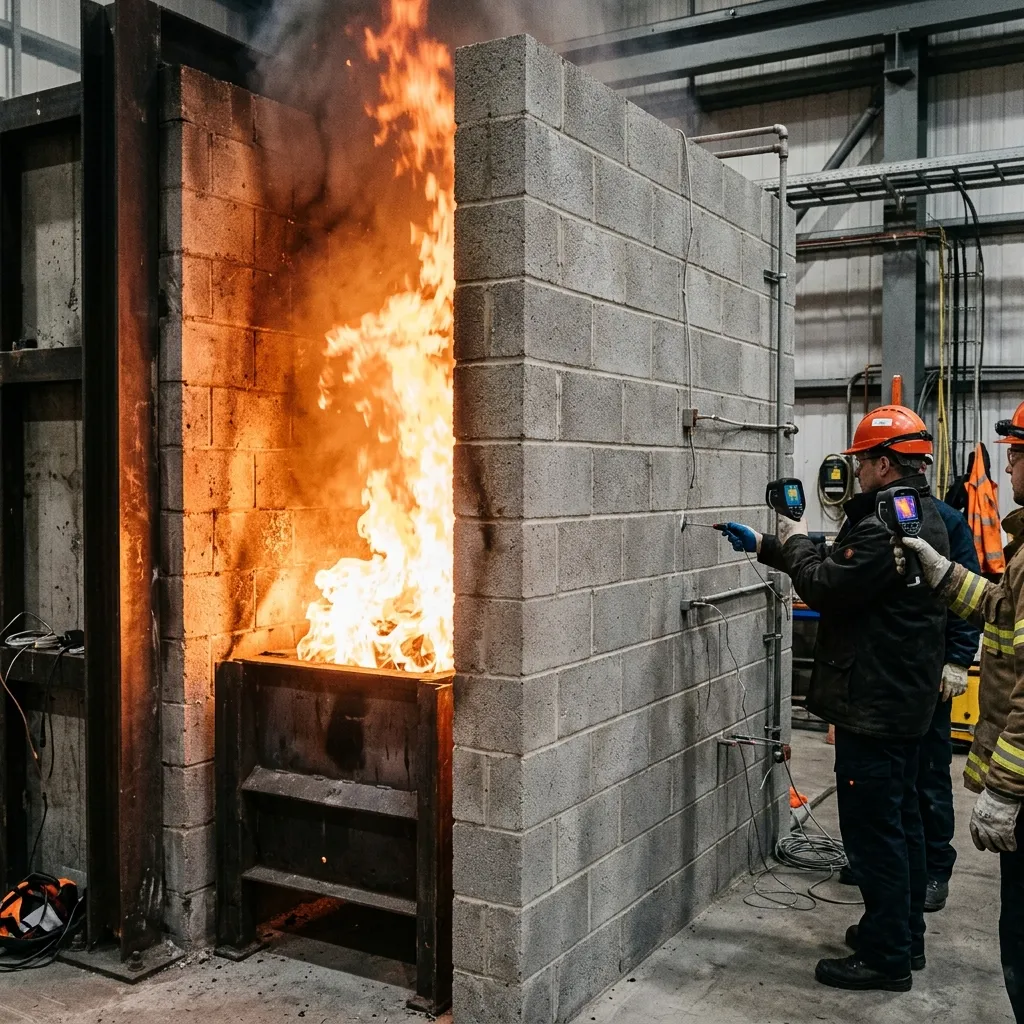
Fired clay bricks can withstand fire for 1 to 2 hours before the structural joints start to degrade. AAC blocks provide up to 4 hours of fire resistance and carry a class A1 fire rating. The melting point of AAC is above 1,200°C, which is far higher than typical building fire temperatures.
Additionally, because AAC contains no organic compounds, it does not release toxic fumes or smoke when exposed to flame. This provides precious time for occupant evacuation during a structural fire, which is a major design consideration for high density municipal developments.
6. Speed of Construction and Masonry Productivity
Masonry speed is heavily impacted by the format size of the blocks. A standard AAC block (600mm x 200mm x 200mm) is equivalent in volume to 9 red clay bricks. Laying one block occupies the same time as laying two bricks, resulting in three times faster construction speed.
Furthermore, because AAC walls are level, they require only a 2mm to 3mm thin bed polymer modified adhesive instead of a 12mm traditional sand cement mortar. This reduces mortar consumption by 80%, eliminates on site water curing, and allows direct application of a thin 3mm gypsum plaster instead of thick cement plastering. This accelerates project schedules, saving interest on construction financing and allowing faster commercial occupancy.
Conclusion: The Structural Choice
For developers, architects, and civil consultants, the technical data points to a clear choice. Switching from traditional clay bricks to Balaji AAC blocks reduces construction costs by ₹120 to ₹160 per square foot of built up area, while improving thermal, acoustic, and safety parameters. AAC represents a complete structural optimization strategy that improves both building performance and project profitability.
B2B Turnkey Setup Solutions Across Maharashtra & India
As a leading engineering company based in Satara, Maharashtra, Balaji Construction Machines and Spares delivers automated autoclaved aerated concrete manufacturing plants nationwide. We specialize in layout engineering, site commissioning, and operator training for customers in major industrial zones around Mumbai, Pune, Nagpur, Nashik, and Aurangabad.
Our installation reach covers key construction markets across Indian states like Gujarat, Madhya Pradesh, Karnataka, Telangana, Andhra Pradesh, and Tamil Nadu. Whether you are running a setup cost estimation for a new factory, looking up detailed machinery specifications, or interested in starting a sustainable B2B business, we provide complete engineering support. Contact our sales team to schedule a technical consultation at your site.