Planning the physical layout and resource dependencies of a new manufacturing facility is key to ensuring operational efficiency. A 72 cubic meter per day autoclaved aerated concrete plant is a standard high efficiency configuration for established investors. In this whitepaper, I will detail the exact land layout dimensions, electrical connected loads, steam boiler capacities, and mechanical parameters required to establish this production setup.
Land Footprint and Site Layout Requirements
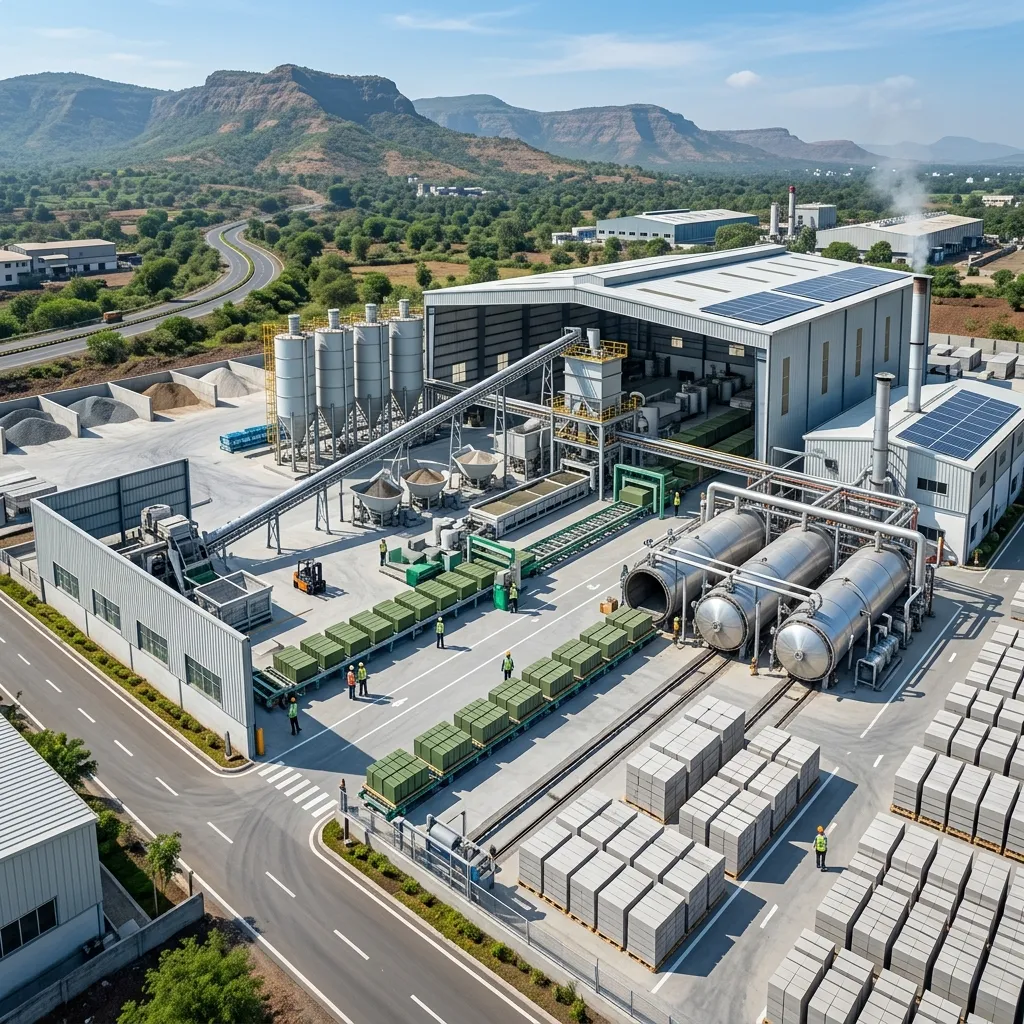
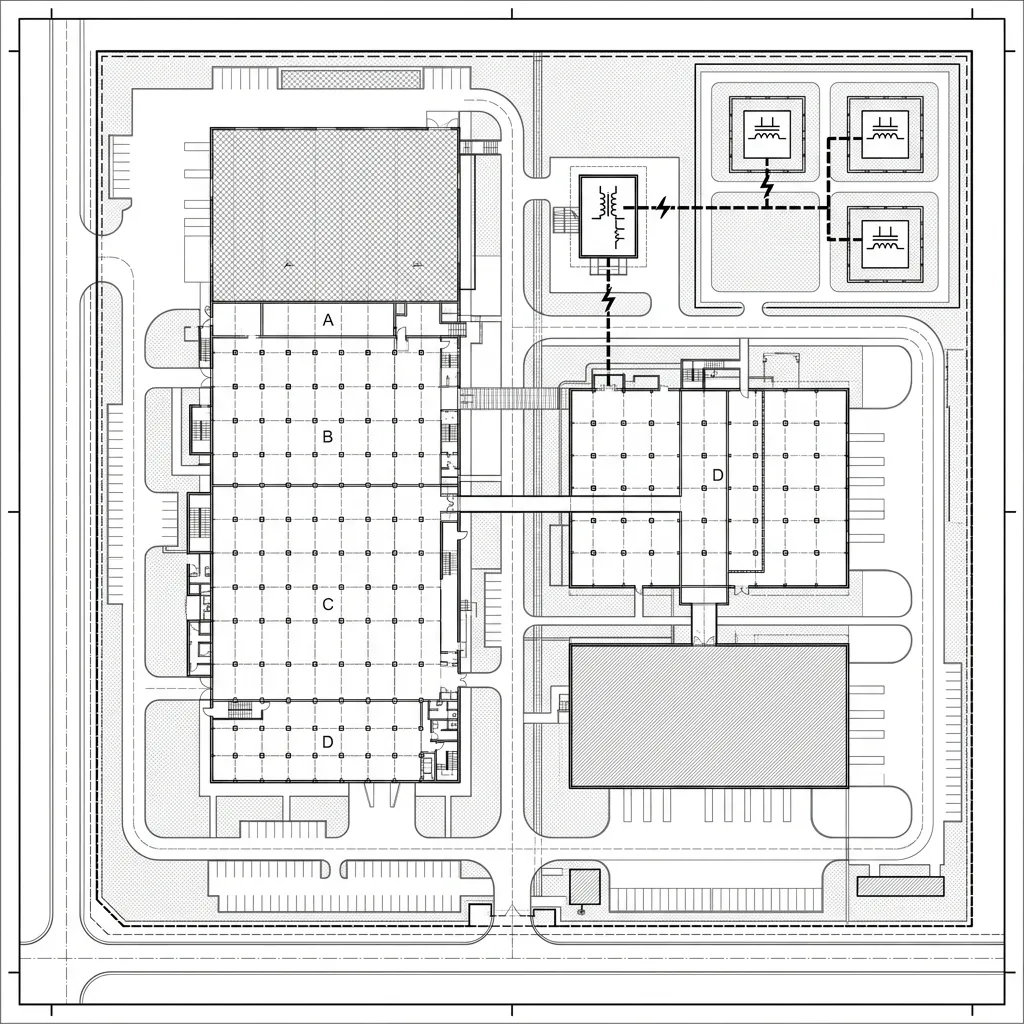
Setting up a 72 CuM daily capacity plant requires a minimum land area of 1.5 to 2.0 acres (approximately 6,000 to 8,000 square meters). The spatial arrangement must accommodate the entire lightweight concrete block manufacturing process, ensuring a smooth material flow from raw material unloading to finished block curing and dispatch.
The site layout is divided into several functional zones:
- Raw Material Storage (30% of land): Open storage yards for fly ash, sand, and gypsum, alongside vertical storage silos for cement and quicklime.
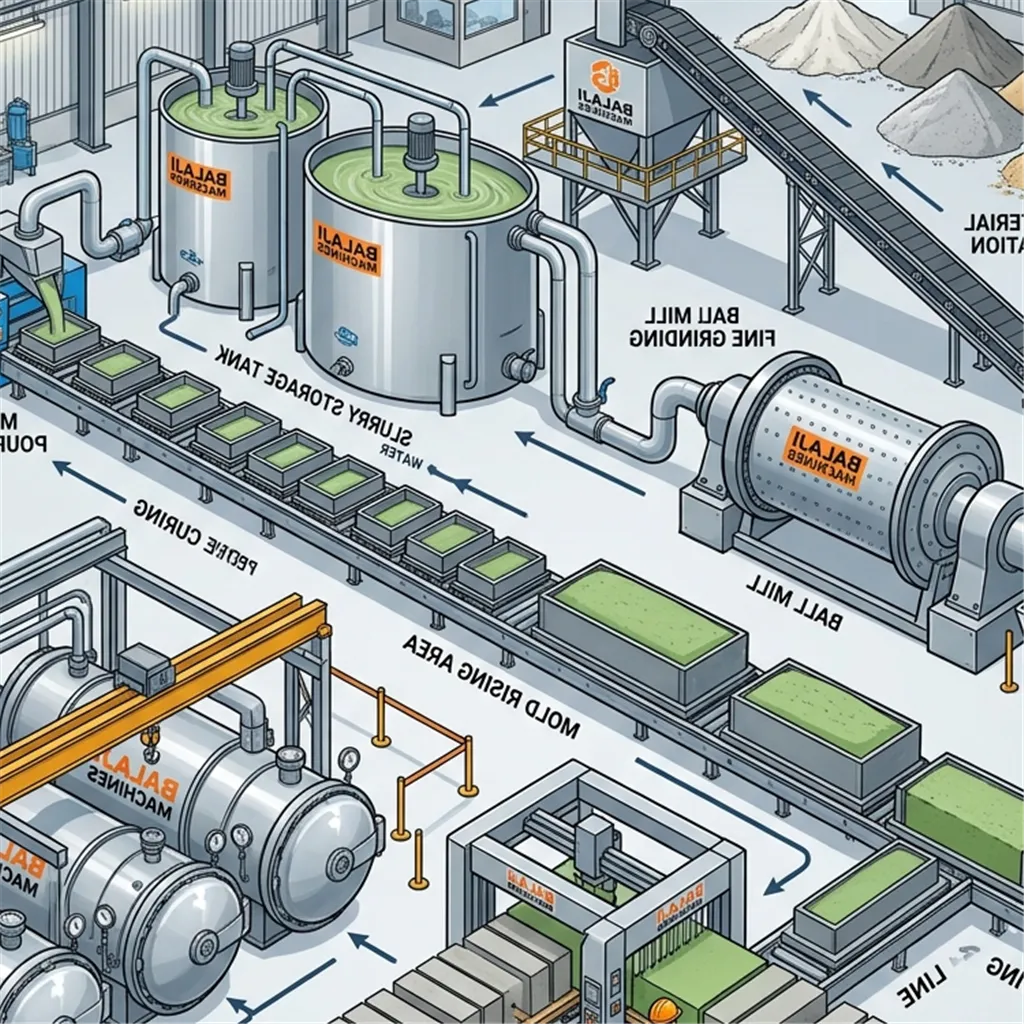
- Processing and Molding Floor (25% of land): Indoor factory shed housing the ball mill, slurry storage tanks, automatic batching scale, aluminum powder dosing unit, slurry mixing mixer, and casting molds.
- Steam Curing Area (15% of land): Autoclave tracks, boiler house, and pre heating chambers where the green cake is prepared before autoclaving.
- Finished Stock Yard (20% of land): Outdoor storage yard for cured block pallets, packing areas, and loading docks for transit trucks.
- Office and Utilities (10% of land): Sub station room, laboratory, administrative office, and security gates.
Electrical Power Connection and Energy Utility Analysis
The connected electrical power requirement for a 72 CuM daily capacity plant is 150 kVA to 200 kVA. This load capacity is necessary to run the heavy industrial motors and slurry pumps simultaneously. In states with high industrial tariffs, using energy efficient motors and VFD controls is critical for maintaining low operating costs.
In addition to electrical power, thermal energy is required to run the steam curing boiler. A 72 CuM plant configuration requires a steam boiler with a capacity of 2.0 to 3.0 tons per hour, operating at a steam pressure of 12 Bar (1.2 MPa). The steam boiler is typically fueled by coal, briquettes, or wood, consuming approximately 1.5 to 2.0 tons of fuel daily.
Autoclaved Aerated Concrete Block Properties and Specifications
A major focus of industrial design is ensuring the finished blocks meet technical guidelines. Autoclaved aerated concrete block properties are defined by physical parameters that dictate structural performance. The concrete blocks feature a low dry density, typically in the range of 550 to 650 kg/m³, making them one third the weight of standard bricks.
Despite their light weight, these blocks achieve a uniform compressive strength of 3.5 to 4.5 N/mm², easily satisfying Indian standard IS 2185 Part 3 specifications. This high ratio of strength to density makes them excellent green building materials in construction, helping developers reduce structural dead load while improving building safety.
| Physical Parameter | Standard Clay Bricks | Balaji AAC Blocks | Engineering Impact |
|---|---|---|---|
| Dry Density | 1,800 to 2,000 kg/m³ | 550 to 650 kg/m³ | Reduces structural dead load, allowing lighter columns and foundations. |
| AAC block compressive strength and density | 3.0 to 3.5 N/mm² | 3.5 to 4.5 N/mm² | Uniform load bearing capacity, reducing localized stresses. |
| Thermal conductivity properties | 0.81 W/m·K | 0.12 to 0.16 W/m·K | Thermal insulation properties of AAC blocks reduce cooling energy costs by 25%. |
| Fire resistance rating | 1 to 2 Hours | Up to 4 Hours | Excellent fire resistant wall materials with a melting point above 1,200°C. |
Key Machinery Efficiencies and Process Parameters
Maintaining high productivity requires careful calibration of the mechanical systems. Below are the core operational parameters for a 72 CuM plant configuration:
1. Ball Mill Efficiency: The ball mill is used to wet grind fly ash or sand into a fine slurry. High ball mill efficiency is crucial, as the fly ash must be milled to a specific surface area (between 3,200 and 3,600 cm²/g) to ensure a complete chemical reaction. Wet grinding is conducted at a slurry water content of thirty five percent.
2. Slurry Mixing Ratio: The slurry mixing ratio represents the exact proportions of fly ash slurry, cement, lime, gypsum, and aluminum powder. A standard B2B mix design contains approximately sixty five percent fly ash, twenty percent cement, ten percent quicklime, four percent gypsum, and less than one percent aluminum powder. Water is added at a water to solids ratio of 0.60 to 0.65.
3. Autoclave Curing Time: After the mixture rises and is cut by high tensile wires into precise block formats, it undergoes high pressure steam curing. The autoclave curing time is typically 10 to 12 hours. During this period, the temperature is raised to 190°C and the pressure is held at 12 Bar, initiating the chemical reaction that forms crystalline Tobermorite.
4. Robotic Stacking System: To prevent block chipping and reduce manual labor costs, modern plants integrate a semi automatic or robotic stacking system. This system lifts the cured block pallets directly from the autoclave cars, stacks them in the finished yard, and prepares them for strapping and stretch wrapping.
Site Construction Benefits: Mortar and Panel System
Using AAC blocks instead of traditional clay bricks yields immediate benefits at the construction site. A detailed AAC block vs red clay brick comparison reveals that because AAC blocks are level and feature interlocking joint surfaces, the mortar consumption for AAC block walls is reduced by eighty percent. Masonry crews lay blocks using a 2mm thick thin bed adhesive instead of a 12mm thick sand cement mortar joint, accelerating site progress.
To cater to the growing demand for precast wall panels, modern plants are designed to be versatile. Plant operators can work with leading AAC wall panel and lintel manufacturers to configure their cutting lines to produce steel reinforced wall panels and door lintels. This diversification allows manufacturers to tap into high value commercial projects and maximize factory profits.
Conclusion: Engineering a Successful Factory Setup
Setting up a 72 CuM autoclaved aerated concrete block plant requires a balanced layout, adequate power supply, and optimized mechanical systems. By configuring a 1.5 acre site with a 200 kVA power line, a 3 ton boiler, and high efficiency ball mills, factory owners can run a highly productive plant. Partnering with a reliable machinery manufacturer ensures that the setup conforms to engineering guidelines and delivers high performance building blocks for the market.
B2B Turnkey Setup Solutions Across Maharashtra & India
As a leading engineering company based in Satara, Maharashtra, Balaji Construction Machines and Spares delivers automated autoclaved aerated concrete manufacturing plants nationwide. We specialize in layout engineering, site commissioning, and operator training for customers in major industrial zones around Mumbai, Pune, Nagpur, Nashik, and Aurangabad.
Our installation reach covers key construction markets across Indian states like Gujarat, Madhya Pradesh, Karnataka, Telangana, Andhra Pradesh, and Tamil Nadu. Whether you are running a setup cost estimation for a new factory, looking up detailed machinery specifications, or interested in starting a sustainable B2B business, we provide complete engineering support. Contact our sales team to schedule a technical consultation at your site.